Why Indian Users Are Trading Instagram Reels for Real-Time P2P Discovery
Published by Chatzyo Insights | Educational & Market Analysis
India’s digital landscape has always evolved at a breakneck pace. Fuelled by the world's most affordable data rates and a massive influx of smartphone adoption, the nation’s screen time was, for several years, almost entirely monopolized by the infinite, algorithmic scroll of short-form video. However, as we move through 2026, market data reveals a quiet but profound behavioral shift. Indian users are experiencing deep psychological burnout and are actively pivoting toward something distinctly different: real-time, Peer-to-Peer (P2P) discovery platforms.
Why is a generation raised on highly curated algorithms suddenly craving raw, unpredictable, live video chats? The answer lies in a complex intersection of psychology, technological advancement, and a growing cultural desire for extreme digital privacy and friction-less access.
The Psychology of "Scroll Fatigue" in the Indian Digital Market
For years, platforms relying on algorithm-driven feeds kept users hooked by serving an endless loop of viral content. The neurological mechanism here is simple: intermittent variable rewards. Every swipe offers the possibility of a dopamine hit. However, this model is inherently isolating. It promotes passive consumption—you watch, you like, you scroll. There is no actual, synchronous human interaction taking place.
As digital literacy deepens across both metropolitan centers and Tier-2 regional hubs, users are increasingly diagnosing their own digital fatigue. They recognize that the content they consume is hyper-manufactured. The ring lights, the rehearsed scripts, the augmented reality (AR) filters, and the trend-chasing have created a massive chasm between digital representation and physical reality. The psychological exhaustion of consuming perfect, unattainable lifestyles has led to a rejection of the algorithmic feed.
The Shift from the "Creator Economy" to the "Connection Economy"
The defining characteristic of short-form video is the "Broadcast Model." One creator speaks to thousands or millions of passive viewers. It is a parasocial relationship—one-sided and inherently unequal. Real-time P2P discovery dismantles this hierarchy completely.
Unlike broadcasting platforms, 1-on-1 video connections present a balanced equation. It demands active participation, real-time reactions, eye contact, and unscripted conversation. It is the exact opposite of a pre-recorded feed. You cannot pause, edit, or filter a live conversation with a stranger. This rawness is exactly what is driving adoption. Users are trading the polished entertainment of the "Creator Economy" for the messy, authentic spontaneity of the "Connection Economy."
Traditional social media operates on a Client-Server model. Your phone (client) asks a central database (server) for a video, and the server sends it back. In a P2P architecture, two devices connect directly to each other to exchange audio and video packets, significantly altering both the speed of connection and the privacy of the data exchanged.
WebRTC: The Technology Driving the Friction-less Change
The massive migration from heavy social media applications to browser-based P2P chats would be technologically impossible without recent advances in WebRTC (Web Real-Time Communication). In the past, video chat required hefty downloads, bloated proprietary apps, mandatory account creation, and immense bandwidth.
Today, WebRTC frameworks allow for direct peer-to-peer data transfers entirely within the mobile browser, utilizing the future of WebRTC communication standards. This is crucial for the Indian market for three specific reasons:
- Zero App Fatigue: Storage space on mid-tier smartphones is a premium commodity. Users simply do not want to download another 150MB application to try a new service. Browser-based P2P operates instantly without an installation barrier.
- Lower Latency over Mobile Networks: Because the data flows directly between the two users (bypassing central server processing), latency is minimized. This makes conversations over standard 4G or 5G networks feel immediate and natural, preventing the awkward audio delays that plague server-reliant video calls.
- Battery Efficiency: Stripped-down, direct WebRTC connections consume significantly less battery power and background processing than rendering endless streams of heavy, server-fetched short-form videos with overlay graphics.
The Cultural Shift: Vernacular Languages and Hyper-Local Connections
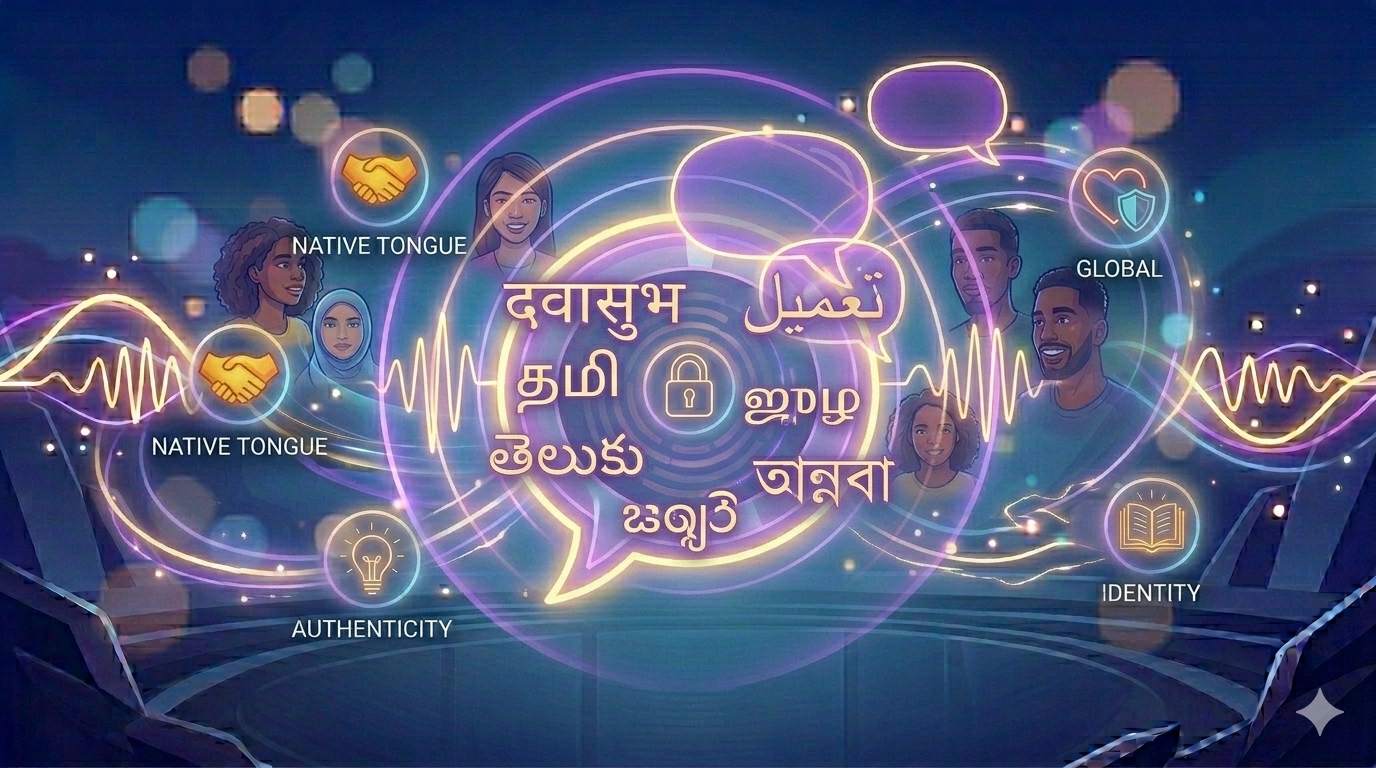
India is not a monolith; it is a tapestry of distinct languages, cultures, and regional identities. While global algorithms often try to group users by broad demographics or push English/Hindi content to the top of the funnel, P2P discovery platforms thrive on hyper-localization.
The desire for localized, vernacular connections is at an unprecedented high. P2P architecture allows platforms to implement localized entry points. For instance, a user can bypass the global pool entirely and enter an India Chat room, or get even more granular by joining a dedicated Tamil Chat portal. This allows a user in Coimbatore to seamlessly connect with a native Tamil speaker in Chennai, instantly bridging the digital gap with shared cultural context, local humor, and native dialects.
This localized, real-time discovery is fundamentally more engaging to the human brain than a generic feed of viral global content. It turns the vast, intimidating internet into a series of intimate, familiar neighborhood spaces.
Privacy First: The Appeal of the "No-Login" Architecture
Perhaps the most critical catalyst for this market shift is the growing consumer awareness regarding data privacy. Traditional social media demands an exorbitant amount of personal data—your phone number, your email address, your exact location GPS data, your contact list, and your device fingerprint—before you are even allowed to view the first post.
Modern P2P platforms have inverted this exploitative model by embracing a strict "no-registration" philosophy. As discussed in our analysis of the no-login revolution, this architectural choice is a massive green flag for privacy-conscious Indian users.
It eliminates the permanent digital footprint. You navigate to a website, grant temporary camera permissions, and talk to someone halfway across the country. When you close the browser tab, the connection vanishes entirely. There are no stored profiles, no behavioral data mining, and no targeted advertisements following you across the internet. By learning to talk to strangers safely within these anonymous boundaries, users reclaim control over their digital identity.
Conclusion: The Antidote to the Algorithm
The shift away from the infinite scroll is not a rejection of the internet or digital entertainment; rather, it is a maturation of it. Indian users are definitively signaling that they value active, unscripted human connection over passive algorithmic consumption.
By combining lightweight WebRTC technology, strict data-privacy standards, and the psychological relief of a "no-login" environment, P2P video chat isn't just serving as an alternative to short-form video—it is actively serving as the antidote to algorithmic isolation.
Frequently Asked Questions
P2P (Peer-to-Peer) video discovery connects two users directly through their web browsers using WebRTC technology. It bypasses central processing servers, allowing for real-time, low-latency, and unscripted video conversations without the need to download an app.
Scroll fatigue is increasing because algorithms serve repetitive, highly curated, and passive content designed to keep users swiping. Users are becoming psychologically exhausted by the lack of genuine human interaction and the artificial nature of the content, leading them to seek out active, real-time communication platforms instead.
No-login platforms do not require users to create accounts, provide emails, or link phone numbers. When a video session ends and the browser tab is closed, the connection data is severed. This leaves no permanent digital footprint or behavioral profile for corporate data brokers or advertisers to mine.