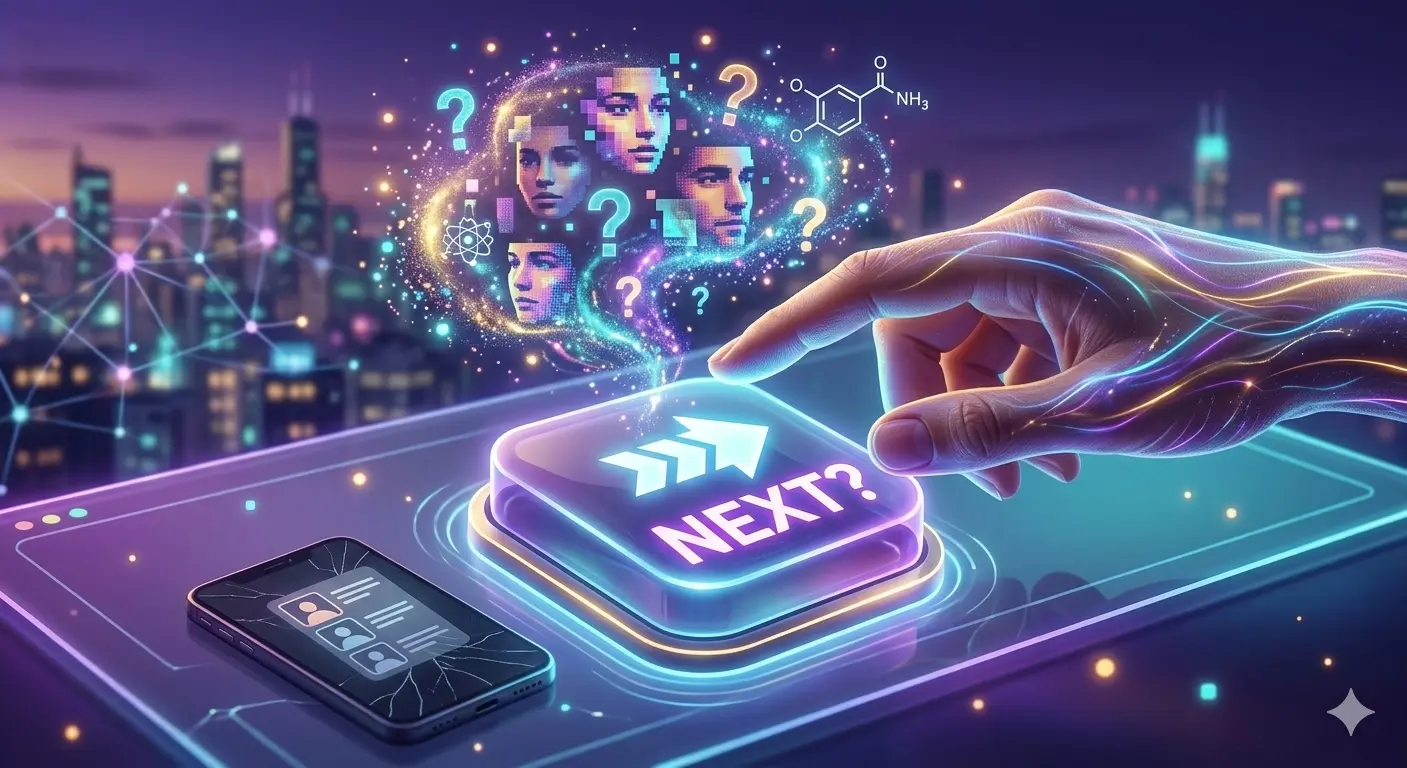
The Psychology of the "Next" Button: Why the Unknown is Better Than the Familiar
In the digital landscape of 2026, we are surrounded by algorithms that know us too well. From Netflix suggesting your next binge-watch to Instagram curating your perfect feed, the internet has become a "known" entity. Yet, there is a massive surge in users flocking to random video chat platforms. The magnet? The "Next" button.
This simple interface element represents the ultimate "Curiosity Gap." When you click next, you aren't just changing a video feed; you are gambling with social possibilities. This article explores the deep-seated neurological and psychological reasons why humans are inherently attracted to the thrill of the unknown over the comfort of the familiar.
The Curiosity Gap and Dopamine Spiking
Neuroscience tells us that the brain's reward center, the nucleus accumbens, is most active not when we receive a reward, but when we are anticipating one. This is known as "Variable Ratio Reinforcement." It is the same mechanism that makes slot machines in Las Vegas so difficult to walk away from.
When you use a 1-on-1 video call service, each skip is a mini-lottery. Because you might meet a lifelong friend, a hilarious comedian, or a traveler with a unique story, your brain keeps you clicking. The "Next" button is the digital equivalent of a mystery box. The psychological tension created by not knowing who is on the other side of the connection is far more engaging than scrolling through a feed of people you already know.
Pattern Breaking: Solving Digital Fatigue
Modern social media is built on "Similarity." If you like one post, you see a thousand more like it. Over time, this creates Cognitive Satiation—the brain essentially gets bored because it can predict what is coming. This leads to the "zombie scroll" where users are active but disengaged.
Random social discovery acts as a "Pattern Break." Because you might transition from a conversation in Tamil chat rooms to a room with someone from London in a single click, your brain is forced to stay present. You have to evaluate micro-expressions and social cues in real-time. This active engagement is much more satisfying than passive consumption.
The "Safe" Social Gamble
Why do we feel comfortable clicking "Next" with a stranger but feel anxious at a real-life party? The answer lies in the **Anonymity Shield**. On platforms like Chatzyo, the "Next" button provides an instant exit strategy. If a conversation becomes awkward, you aren't trapped in a corner of a room; you are one click away from a fresh start.
This "Safety Net" allows users to practice social skills without the fear of long-term reputational damage. It facilitates a form of anonymous digital freedom that is rare in the era of permanent digital footprints. This freedom encourages users to be more authentic, ironically leading to deeper connections than those found on traditional social networks.
The Social Discovery Arc: 2026 Trends
As we move further into 2026, the trend of "Spontaneous Sociality" is replacing "Curated Sociality." People are tired of the pressure to maintain a perfect profile. They want to be seen for who they are in the moment, not for their "grid." The "Next" button facilitates this "In-The-Moment" philosophy. It values the present interaction over the past history.
Regional vs. Global Discovery
Interestingly, the "Next" button serves two different psychological needs. For some, it is about finding their own community, like exploring UK chat rooms to find expats. For others, it is purely about the "Global Roulette"—the desire to be transported halfway across the world in 180 frames. Both needs are fueled by the same "Next" button mechanic.
Frequently Asked Questions
Because it triggers dopamine through variable rewards, it can be. It is important to use these platforms mindfully. We recommend setting a "discovery goal" for each session to keep your interactions healthy and productive.
This is called "Social Speed-Dating." If the first eye contact signals aren't aligned, the brain quickly chooses to skip to find a better "reward." It’s rarely personal; it’s just the brain seeking a specific social vibe.
Focus on your "Frame 0" presence. Good lighting, a genuine smile, and looking at the camera lens (not the screen) are the most effective ways to bridge the curiosity gap and make the other person want to stay.
Summary: The Power of the Click
The "Next" button is more than just a piece of code; it is a gateway to the unexpected. It satisfies our primal need for novelty and our modern need for privacy. In a world where everything is tracked and predicted, the "Next" button remains the last frontier of digital spontaneity. So, the next time you find yourself clicking "Next," remember: you aren't just skipping a face—you are participating in one of the most complex neurological games of the 21st century.