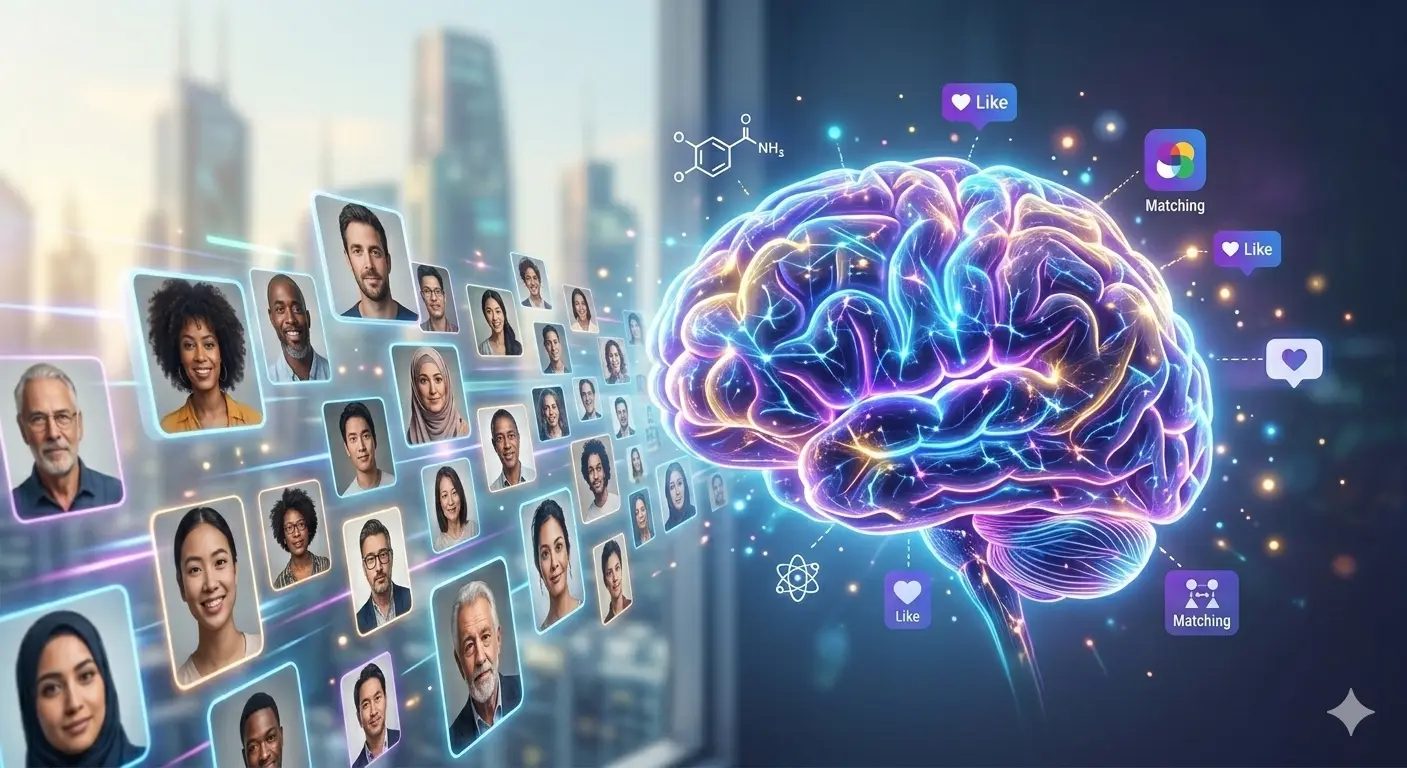
The "Infinite Scroll" of Faces: Why the Human Brain Craves Random Discovery
In the digital age of 2026, our social habits have undergone a radical transformation. While traditional social media platforms rely on curated feeds and algorithmic "perfection," a parallel movement has gained massive momentum: Random Social Discovery. But why is the simple act of clicking "Next" to meet a stranger so compelling? The answer lies deep within the chemical architecture of the human brain.
The Dopamine Loop of the Unknown
At the core of the random video chat experience is the "Variable Reward" system. This is the same neurological mechanism that makes slot machines or refreshing a social media feed addictive. When you use a random video call service, your brain doesn't know what—or who—is coming next.
This uncertainty triggers the release of dopamine, the neurotransmitter associated with "seeking" and pleasure. Each skip represents a mini-gamble. Will the next person be a musician from Berlin? A traveler from Chennai? Or someone with a hilarious joke? The potential for a high-value social interaction keeps the brain in a state of heightened arousal and engagement.
Novelty as a Survival Mechanism
Evolutionarily, humans are wired to pay attention to novelty. In ancestral environments, identifying a new face or a new sound was a survival skill. Today, that instinct has been digitized. Our brains find "sameness" exhausting—a phenomenon known as digital fatigue. Meeting a total stranger provides a "pattern break" that refreshes our cognitive state. This is why many users report feeling a sense of social detox when moving from curated Instagram feeds to raw, unedited video chat.
The "Safe" Thrill of Anonymity
There is a psychological paradox at play: we are often more honest with strangers than with our closest friends. This is known as the "Stranger on a Train" phenomenon. Because there are no long-term consequences to a 2-minute conversation, the social ego can relax. This leads to what psychologists call "Spontaneous Intimacy." On platforms focused on the science of anonymity, users feel free to express their true thoughts without the fear of social judgment or "cancel culture."
Why 2026 is the Year of Random Discovery
As AI begins to saturate our text-based interactions, the "Human Premium" has skyrocketed. We crave the micro-expressions, the stutter, the laughter, and the "realness" that only a live human face can provide. In an era of deepfakes, seeing a real person in real-time through WebRTC technology is becoming the gold standard for authentic connection.
The Role of Vernacular Connection
For many, especially in regions like India, the thrill is not just in meeting a "stranger," but in meeting a stranger who speaks their mother tongue. The rise of Tamil chat rooms and regional discovery allows users to combine the thrill of the unknown with the comfort of cultural familiarity.
Frequently Asked Questions (FAQ)
It utilizes variable ratio reinforcement. Because you don't know who is next, your brain stays in a dopamine-seeking loop, hoping for a rewarding social connection with each "Next" click.
In moderation, yes. It can improve social skills, reduce loneliness, and provide diverse perspectives. However, it is essential to follow safety guidelines to protect your privacy.
Many psychologists suggest that "low-stakes" social interactions with strangers can act as informal exposure therapy, helping individuals build confidence in a controlled, anonymous environment.
Most modern platforms use WebRTC (Web Real-Time Communication), which allows video and audio data to travel directly between two users' browsers without needing a central server, ensuring almost zero lag.
Summary: Embracing the Digital Campfire
At our core, we are social animals. The "Infinite Scroll" of faces is the 2026 version of gathering around a digital campfire. It fulfills our primal need for connection, our neurological craving for novelty, and our psychological desire for a judgment-free space. As long as we have brains that seek reward, we will continue to find joy in the unexpected click of a "Start" button.