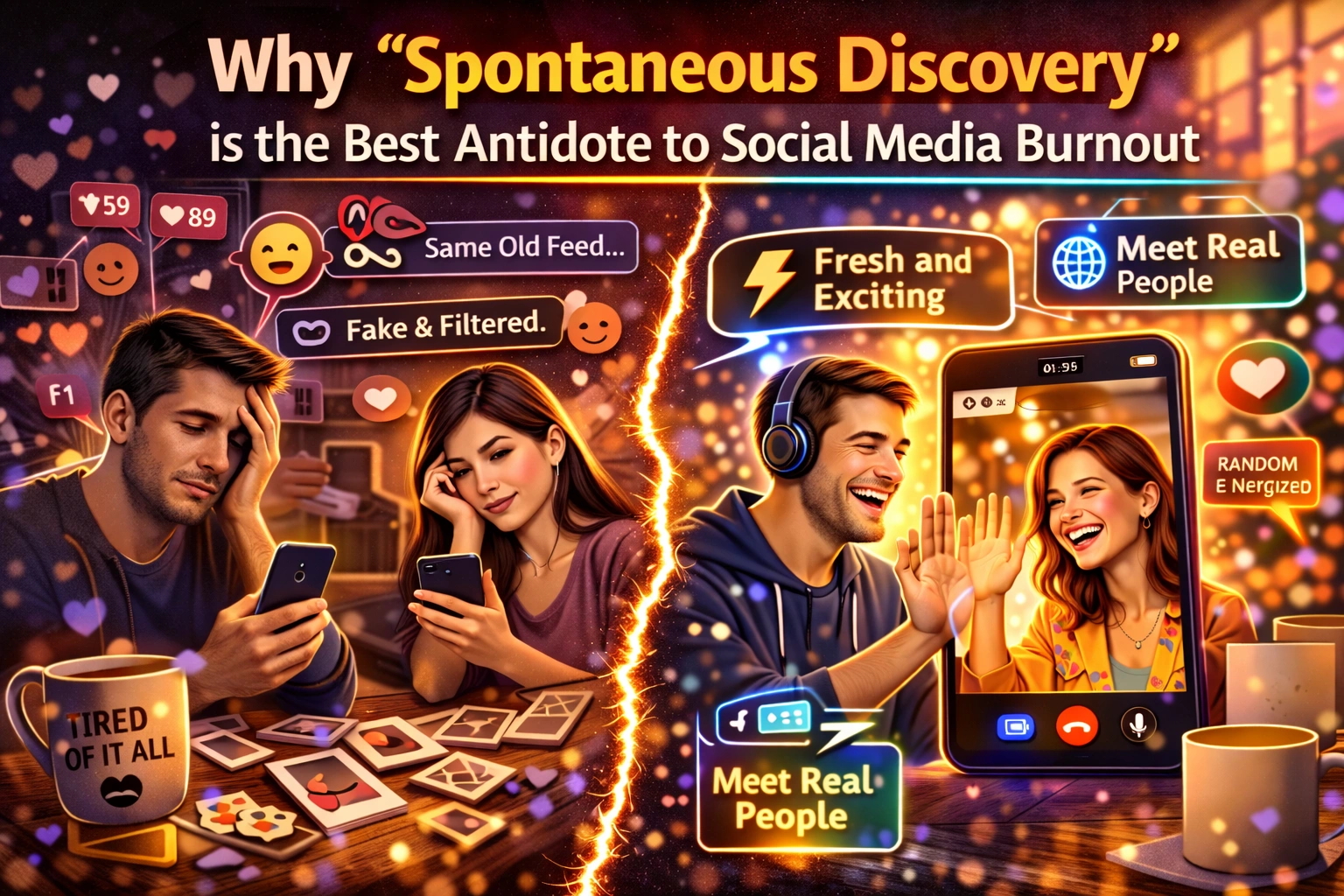
Why "Spontaneous Discovery" is the Best Antidote to Social Media Burnout
Published by Chatzyo Insights | Niche Interests & Brand Utility
We are living through a profound crisis of connection. Despite carrying supercomputers in our pockets capable of reaching anyone on Earth in milliseconds, global rates of loneliness and social isolation have skyrocketed. The paradox of the modern internet is that we have never been more "connected," yet we have never felt so fundamentally unseen.
The culprit behind this paradox is the architecture of Web 2.0 itself. Over the last decade, social interaction was commodified into a passive, algorithmically curated feed. However, as we move through 2026, millions of users are diagnosing their own digital fatigue and logging off. In their search for an authentic alternative, they are turning to the concept of "Spontaneous Discovery."
In this educational exploration, we will dissect the anatomy of social media burnout, analyze why our brains are rejecting algorithmic feeds, and explain why the unscripted chaos of random video chat is the ultimate psychological antidote.
The Anatomy of Algorithmic Exhaustion
To understand the cure, we must first accurately diagnose the disease. Social media burnout is not just a feeling of being tired; it is a measurable neurological response to the modern internet landscape. Traditional platforms are built on three incredibly taxing pillars:
- The Performance of Perfection: Mainstream networking apps force you to curate a digital identity. Every photo is filtered, every bio is optimized, and every post is a calculated performance for an audience. Maintaining this avatar is emotionally exhausting.
- Parasocial Isolation: Short-form video platforms promote "parasocial" relationships—one-sided dynamics where you watch a creator for hours, feeling a false sense of intimacy, while they do not know you exist. You are consuming socializing, not participating in it.
- The Echo Chamber: Recommendation algorithms are designed to show you content you already agree with to keep you scrolling. Over time, this creates a sterile, predictable digital reality devoid of surprise or genuine challenge.
When you combine the pressure to perform with the isolation of passive consumption, the result is deep psychological burnout. You close the app feeling drained, anxious, and emptier than when you opened it.
Infinite scrolling targets the brain's dopamine pathways (the "seeking" chemical), creating addiction without satisfaction. Genuine, face-to-face social interaction releases oxytocin (the "bonding" chemical), which promotes feelings of trust, calm, and psychological safety. Social media offers dopamine; spontaneous discovery offers oxytocin.
Defining "Spontaneous Discovery"
Spontaneous discovery is the exact opposite of the algorithmic feed. It is the digital equivalent of striking up a conversation with a stranger at a bus stop, in a coffee shop, or at a concert. It relies on serendipity, unpredictability, and mutual participation.
This phenomenon is experiencing a massive renaissance due to the post-algorithm era of socializing. Powered by seamless WebRTC connections, modern platforms allow users to instantly bypass the curated feed and drop directly into an unscripted, real-time conversation.
There are no followers, no like buttons, and no comment sections to manage. There is only the person on the other side of the screen and the immediate, shared reality of the present moment.
The Relief of the "No-Login" Architecture
A massive contributing factor to social media burnout is the feeling of permanence. Everything you say or do is logged, tracked, and attached to your permanent "Digital Dossier." You are never allowed to reinvent yourself or have a casual conversation without it becoming part of your brand.
Spontaneous discovery platforms cure this through the no-login revolution. By eliminating accounts and passwords, these platforms embrace a zero-data philosophy.
The psychological relief of this architecture cannot be overstated. When you connect with someone via a 1-on-1 video call without an account, the interaction is completely ephemeral. You can be goofy, you can be vulnerable, you can debate a silly topic, and when you close the browser tab, the interaction is gone forever. This "single-session socializing" removes the immense pressure of maintaining a digital identity, allowing you to finally relax and be yourself.
Shattering the Algorithmic Echo Chamber
Perhaps the most profound benefit of spontaneous discovery is its ability to burst our digital bubbles. Algorithms inherently segregate us by demographics, political views, and consumer habits.
Random video chat is wonderfully egalitarian. In a single hour, a user might speak to a university student in Tokyo, a musician in London, and a local entrepreneur in a specialized India chat room. You are forced to interact with humanity as it actually exists—messy, diverse, contradictory, and fascinating—rather than the sanitized, categorized version presented by a corporate algorithm.
This exposure to genuine diversity fosters empathy. It reminds us that behind the screen names and the angry text comments of the broader internet, there are real human beings with complex lives.
Conclusion: Returning to Human Nature
We are not machines designed to process infinite feeds of data. We are social animals designed to read facial expressions, hear the nuance in a tone of voice, and share spontaneous moments of connection with our fellow human beings.
If you find yourself exhausted by the endless scroll, the cure is not a better algorithm; the cure is stepping outside the algorithm entirely. By embracing spontaneous discovery and real-time, peer-to-peer interactions, we can cure our digital burnout and reclaim the joyful, unpredictable magic of authentic human connection.
Frequently Asked Questions
Social media burnout is primarily caused by the combination of infinite algorithmic scrolling (which causes dopamine fatigue), the constant psychological pressure to maintain a highly curated digital persona, and the cognitive exhaustion of parasocial relationships that fail to provide genuine, two-way human connection.
Spontaneous discovery removes the algorithm and the user profile entirely. Instead of passively scrolling through pre-recorded, curated content, you actively engage in real-time, unscripted video or voice conversations with random people, bringing back the serendipity and authenticity of the early internet.
Yes, often significantly. Because platforms with a zero-data, no-login philosophy do not save profiles or connection histories, the interactions are completely ephemeral. This dramatically lowers the social stakes, allowing introverts to practice socializing, enjoy brief meaningful interactions, and disconnect instantly without the burden of long-term social obligations.