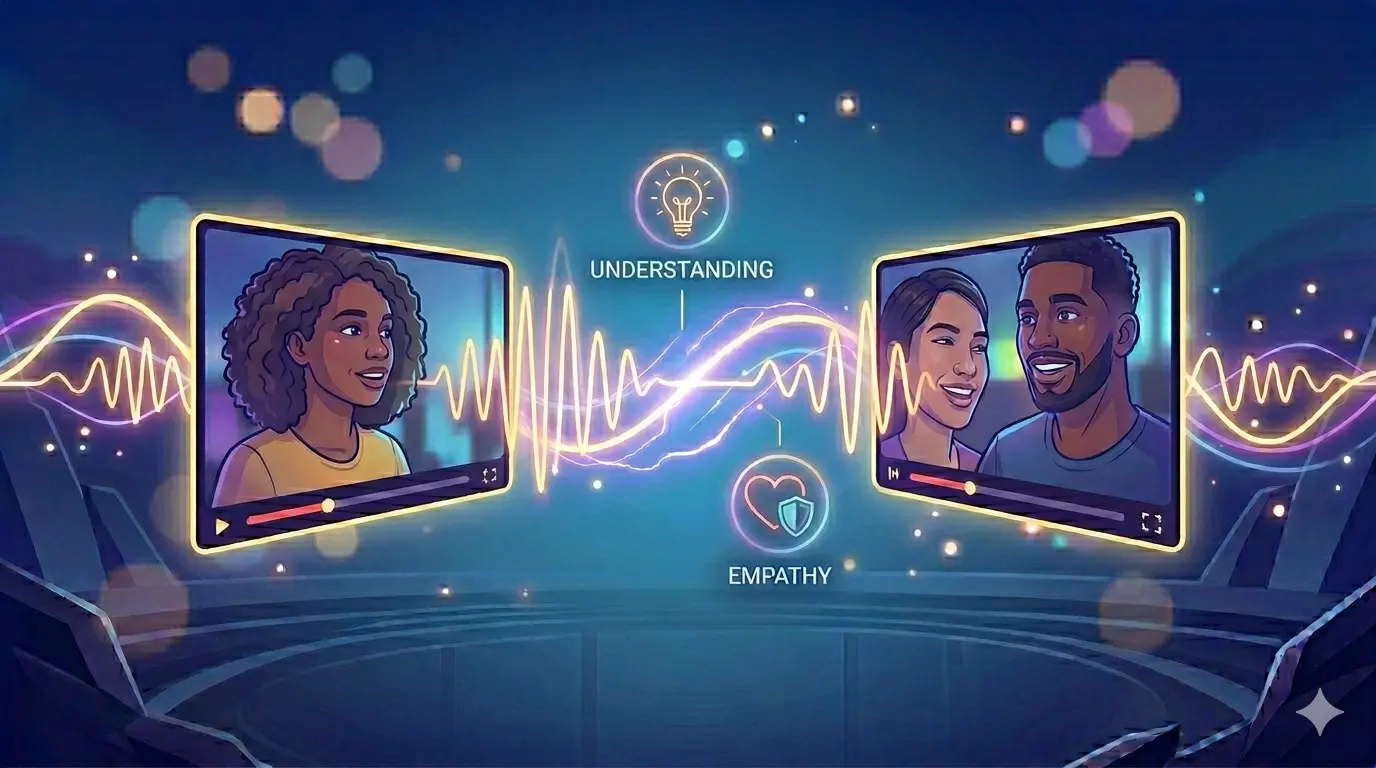
The "Active Listener" Framework: How to Make a Stranger Feel Heard in 60 Seconds
In the hyper-fast environment of random video chat, attention is the most valuable currency you possess. In a world dominated by endless scrolling, fragmented attention spans, and notifications, giving a stranger your undivided, high-quality focus is a radical act of empathy. However, truly listening is a skill that has largely deteriorated in the digital age. Most people do not listen; they merely wait for their turn to speak.
To become a high-value conversationalist—someone people genuinely want to connect with rather than skip—you must master the mechanics of active listening. Whether you are chatting with a tech worker in Silicon Valley or a university student in a regional chat room in Coimbatore, human beings share a universal desire to be understood. Here is the exact 60-second "Active Listener" framework that will transform your digital interactions from superficial small talk into memorable connections.
Seconds 0-15: The Visual Anchor
Active listening begins before a single word is spoken. The moment a 1-on-1 video call connects, the other user's subconscious is rapidly scanning your body language to determine if you are a threat, a troll, or a friend.
Your first task is to establish a visual anchor. As we detailed in our guide to video chat eye contact, looking directly into the camera lens (rather than down at the screen) creates the illusion of direct eye contact for the other person. Combine this with an open posture—shoulders relaxed, hands visible if possible—and a subtle nod. You are silently communicating: "I am here, and you have the floor." Do not immediately start adjusting your hair or looking off-screen; give them the gift of immediate visual presence.
Seconds 15-30: The "Non-Intrusive Murmur"
As the stranger begins to speak, the worst thing you can do is maintain a stone-faced silence. While you don't want to interrupt, complete silence in a digital medium can feel like a dropped connection or profound disinterest.
This is where the "non-intrusive murmur" comes in. As they explain a concept or tell a brief story, use micro-affirmations. A soft "Mhm," "Right," or a subtle "Wow" lets them know you are actively tracking their narrative. Because our platform is engineered with zero-latency WebRTC, these micro-audio cues register instantly without the disruptive audio-clipping caused by older, laggy server architectures. It creates a continuous loop of encouragement.
Seconds 30-45: The Parroting Technique
Once the speaker reaches a natural pause, you must prove that you actually absorbed the information. The most effective psychological tool for this is "Parroting" (also known as tactical echoing).
Parroting involves taking the last three to four words of the stranger's sentence and repeating them back with an inquisitive tone.
- Stranger: "It's been a crazy week, I’m trying to set up a new retail shop downtown."
- You: "A new retail shop?"
This sounds almost too simple to work, but it is a foundational technique utilized by hostage negotiators and therapists. It requires zero cognitive load on your end, but to the speaker, it feels like profound conversational mirroring. It forces them to elaborate, pushing the conversation past surface-level pleasantries and into genuine substance, dramatically reducing the chances they hit the Next Button.
Seconds 45-60: Emotional Labeling
The final step in the 60-second framework elevates the connection from logical understanding to emotional validation. People don't just want you to hear the facts of their story; they want you to recognize how the story made them feel.
When they finish their thought, apply an emotional label. Use the phrase: "It sounds like..." or "It seems like..."
- "It sounds like opening that business has been incredibly exhausting but rewarding."
- "It seems like you are really passionate about that game."
If you label the emotion correctly, the stranger will immediately feel a rush of dopamine and a sense of deep rapport. They will nod enthusiastically and say, "Exactly!" If you label it incorrectly, they will gently correct you ("Well, not exactly exhausting, just complicated"), which still serves to deepen the dialogue. Either way, you have successfully proven that you are an active, invested participant in their reality.
Why This Matters in an Anonymous Space
You might wonder why it is worth investing this level of psychological effort into an anonymous stranger you may never speak to again. The answer lies in the nature of digital ephemerality. Because platforms like Chatzyo operate on a strict zero-data retention policy, the interaction is stripped of real-world consequences and social posturing.
You are not networking for a job; you are not trying to impress a date. You are engaging in raw, unadulterated human connection. By practicing the Active Listener framework in this safe, low-stakes environment, you are actually building a "social muscle" that will profoundly improve your relationships with your family, your coworkers, and your friends in the physical world.
Frequently Asked Questions
The Active Listener framework is for genuine conversations. If someone violates our Community Guidelines or behaves inappropriately, immediately utilize the "Next" button. You owe no one your time if they do not respect your digital boundaries. Learn more in our safe chatting guide.
Like any new skill, it might feel slightly mechanical the first few times you try it. However, because you are dealing with a new stranger every time, it is the perfect environment to practice until these techniques become a natural, unconscious part of your conversational flow.
Conclusion: The Rarity of Attention
We are starving for attention in the modern world. By deploying visual anchors, non-intrusive murmurs, tactical parroting, and emotional labeling within the first sixty seconds of a video chat, you instantly separate yourself from 99% of internet users. You transform an anonymous digital encounter into a moment of profound, unforgettable empathy. Next time you connect, stop waiting to speak, and start actively listening.