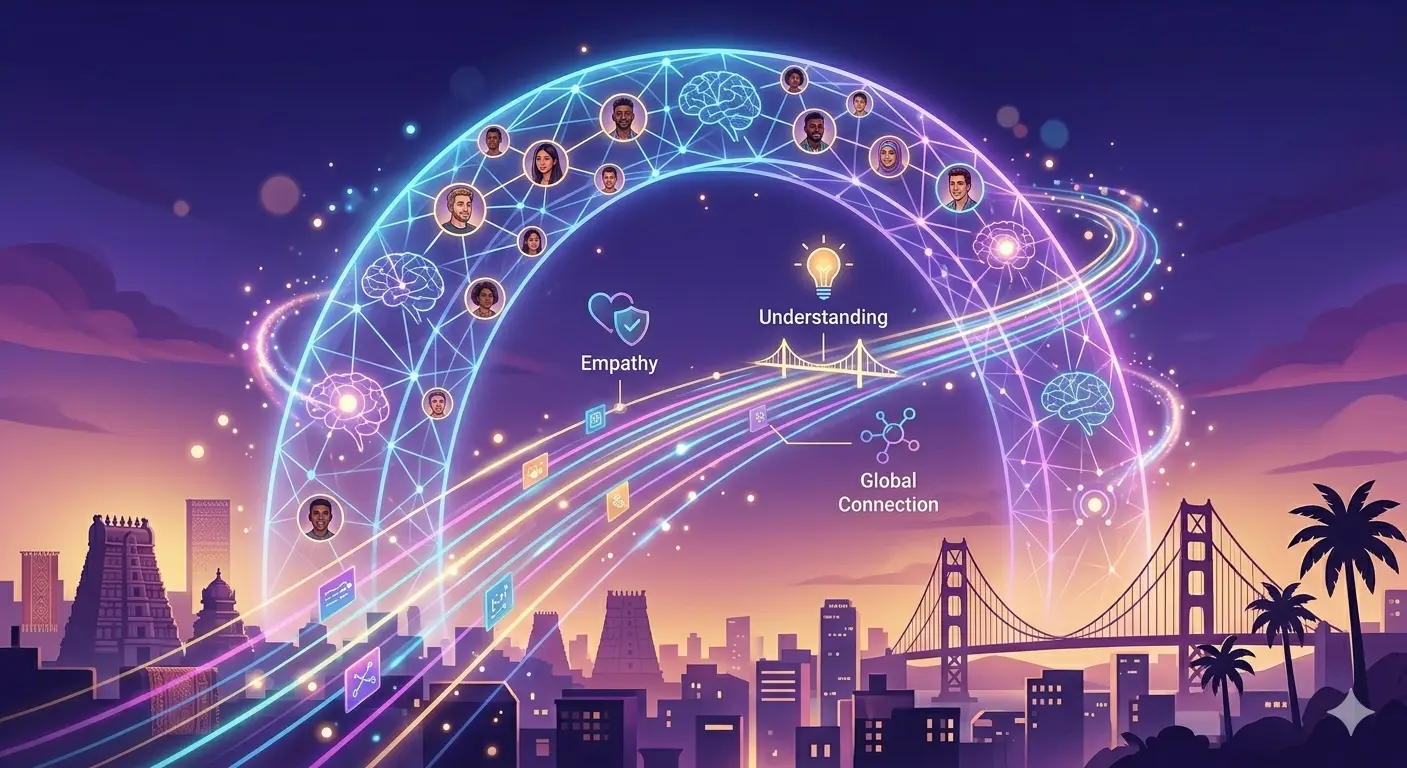
From Coimbatore to California: How Spontaneous Chats Are Building Global Empathy
The physical distance between Coimbatore—the vibrant, industrious Manchester of South India—and California—the sun-drenched tech capital of the world—is roughly 8,500 miles. For centuries, this distance dictated a total disconnect in culture, lifestyle, and mutual understanding. Today, thanks to the architecture of WebRTC and random video chat platforms, that distance has been reduced to zero milliseconds.
While the internet has historically promised to make the world a smaller place, social media algorithms have often done the opposite, trapping users in regional and ideological echo chambers. However, a quiet revolution is happening on spontaneous discovery networks. By forcing interactions outside of our pre-determined social graphs, we are engaging in a radical act of global empathy building.
The Empathy Deficit in the Algorithm Age
To understand the value of spontaneous global chatting, we must first understand the "Empathy Deficit" created by traditional algorithms. Platforms like Instagram or TikTok serve content based on your past behavior. If you live in Kurichi Phase 2, Coimbatore, and manage a local retail business, your feed will hyper-optimize to show you local news, regional memes, and hyper-targeted ads. You are never pushed to understand the daily life of a software developer in Palo Alto unless it makes headlines.
This creates a sociological blind spot. We begin to view foreign cultures solely through the lens of news media and curated influencer content—both of which heavily rely on sensationalism and stereotypes. Real empathy cannot be built through a broadcast; it requires a bilateral exchange.
A Case Study in Connection: The South India to West Coast Bridge
Let’s look at the interaction between users in our Tamil chat rooms and our USA chat servers. When a young entrepreneur from Coimbatore connects with a startup founder in California, a profound cultural exchange occurs that transcends formal networking.
They aren't trading business cards; they are trading realities. The Californian might learn about the rich textile history and rapid IT growth of Tamil Nadu, moving beyond the monolithic Western stereotypes of India. Conversely, the user from Coimbatore might hear about the extreme cost of living and tech-industry burnout in Silicon Valley, realizing that the "California Dream" has its own complex struggles.
These conversations are raw and unscripted. Because they happen in an anonymous digital environment, the pressure to "perform" is removed. Users ask the genuine, sometimes naive questions they would never dare ask in a formal setting. "What is the street food actually like there?" "Is it really sunny every day?" "How do you handle the traffic?" These mundane details are the very building blocks of human empathy.
The Neuroscience of the "Stranger"
Why is video chat specifically so effective at breaking down borders? It comes down to evolutionary biology and micro-expressions.
For most of human history, a stranger from a foreign land was perceived as a potential threat. Our amygdala (the brain's fear center) is wired to be cautious. However, when we engage in a high-fidelity video chat, we utilize our "Mirror Neuron System." When we see a stranger across the world laugh, smile, or express frustration, our brain physically mirrors that emotion.
You cannot hate someone whose laughter you have shared. By establishing direct eye contact through a webcam, we bypass geopolitical conditioning and trigger a biological recognition of shared humanity. We realize that despite the 8,500 miles and the 12-and-a-half-hour time difference, we share the same fundamental anxieties, hopes, and sense of humor.
Active Exchange vs. Passive Consumption
It is important to differentiate between consuming foreign media and interacting with a foreign citizen. Watching a documentary about California or a vlog about Coimbatore is passive. You are receiving a curated narrative.
Spontaneous chat is active. It is "Language Immersion" and "Cultural Immersion" happening simultaneously. You have to actively listen, adapt your communication style, and navigate cultural nuances in real-time. This active participation creates a much stronger cognitive map of the other culture. It turns "Them" into "Us." It turns a point on a map into a face, a voice, and a memory.
Cultivating Global Citizenry in 2026
As remote work grows and the "digital nomad" lifestyle expands (making the digital watercooler a reality), the need for cross-cultural empathy has never been higher. Platforms like Chatzyo are no longer just entertainment; they are the training grounds for a globalized society.
Every time a user from India successfully navigates a conversation with a user from the US, UK, or Europe, they are tearing down a microscopic piece of a border. They are challenging their own biases and proving that authentic connection does not require a shared zip code—it only requires an open mind and a willingness to say "Hello."
Frequently Asked Questions About Global Chatting
Patience is key. Speak slowly, avoid heavy regional slang or idioms, and use expressive body language. Many users find that the effort taken to understand each other actually deepens the connection and makes the conversation more memorable.
Yes, as long as you adhere to our Community Guidelines. Never share sensitive personal information (like your exact home address or financial details), regardless of where the other person is from. The beauty of the platform is the anonymity it provides while connecting you globally.
Don't take it personally! Sometimes users are specifically looking for people in their own timezone to practice a specific language, or they might just be moving quickly through the network. Keep clicking "Next," and you will find someone eager to learn about your culture.
While our core random chat is fully global to maximize serendipity, we do offer localized rooms (like UK, USA, or Tamil rooms) if you want to focus your cultural exploration on a specific demographic or diaspora.
Conclusion: The Bridge of Pixels
The journey from Coimbatore to California no longer requires a visa, a 20-hour flight, or a corporate sponsorship. It only requires an internet connection and a sense of curiosity. As we continue to navigate a complex, often divided world, these spontaneous, unscripted moments of digital empathy are not just refreshing—they are essential. They remind us that the world is vast, diverse, and ultimately, deeply interconnected.