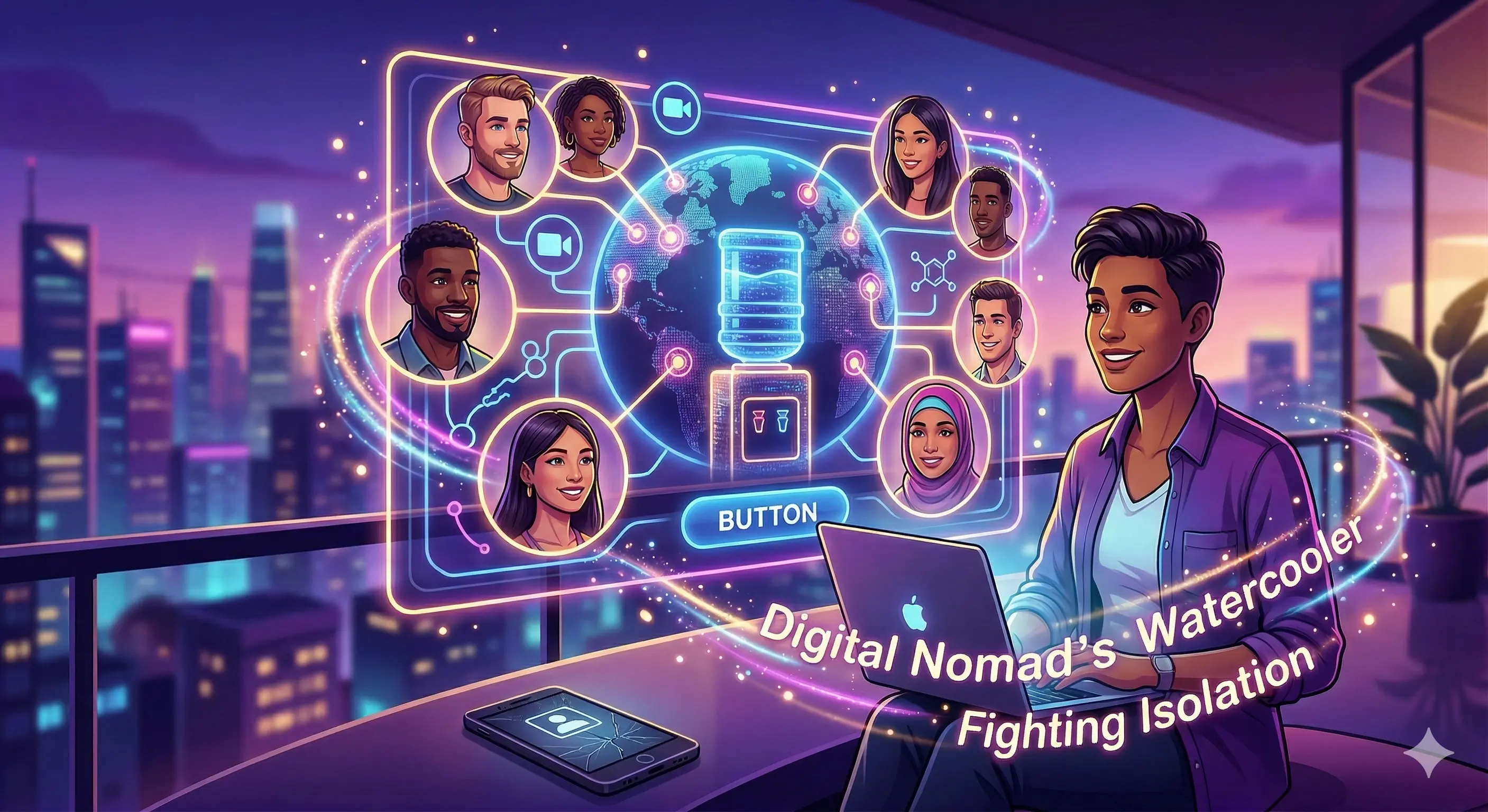
The Digital Nomad’s Watercooler: Using Random Chat to Fight Remote Work Isolation
The year is 2026, and the traditional 9-to-5 office is becoming a relic of the past. The rise of the "work from anywhere" movement has allowed millions to swap cubicles for beachfront cafes, mountain cabins, and bustling international cities. But as the digital nomad lifestyle has scaled, a silent epidemic has followed closely in its wake: profound social isolation.
While remote workers have mastered productivity, they have lost something fundamentally human: the spontaneous office watercooler. To fill this void, a surprising trend has emerged. Professionals are increasingly turning to random video chat platforms as a modern, global replacement for the serendipitous encounters they used to have in office hallways.
The Anatomy of Remote Isolation
When you work in an office, socialization is baked into the architecture of your day. You nod to the receptionist, chat about the weather while waiting for the coffee machine, and share brief complaints about the printer. These interactions might seem trivial, but sociologists categorize them as crucial "micro-interactions."
When you transition to a digital nomad lifestyle, these micro-interactions vanish. Your communication becomes strictly utilitarian. You speak to your boss about deliverables. You speak to your clients about invoices. Every conversation is scheduled, purposeful, and heavily monitored via corporate software. The lack of spontaneous, low-stakes interaction leads to a psychological phenomenon known as "Zoom Fatigue," compounded by profound loneliness.
The Sociological Importance of "Weak Ties"
In 1973, sociologist Mark Granovetter published a groundbreaking paper titled "The Strength of Weak Ties." He argued that our closest friends and family (strong ties) provide emotional support, but our acquaintances and brief encounters (weak ties) are the ones who expose us to new ideas, diverse perspectives, and novel opportunities.
For a digital nomad, building strong ties in a new city every few months is exhausting. However, generating weak ties is essential for mental health. This is where a 1-on-1 video call platform becomes a psychological tool. By hopping onto a social discovery site for just 15 minutes during a lunch break, a remote worker can engage with a stranger, share a laugh, and simulate the exact neurological benefits of an office watercooler chat—without leaving their Airbnb.
Why Random Video Chat is the Perfect Antidote
Why are highly educated professionals choosing random stranger chat over joining local networking events? The answer lies in the friction of modern socialization.
Going to a local meetup requires commuting, dressing up, paying for drinks, and committing to at least an hour of interaction. If you are an introverted developer or a tired copywriter, this barrier to entry is simply too high. Random chat, however, operates on the principle of anonymous digital freedom. You can be in your sweatpants, hit "Start," and instantly be face-to-face with someone halfway across the world.
Furthermore, the "Next" button provides ultimate agency. If the conversation isn't clicking, there is no awkward exit strategy required. You simply skip. This low-risk, high-reward environment is exactly what exhausted remote workers need to recharge their social batteries.
Global Networking for the Borderless Worker
The beauty of the digital nomad lifestyle is its global nature. Consequently, a nomad's watercooler shouldn't be restricted by geography. Spontaneous video platforms act as cultural teleportation devices.
Imagine working late on a marketing campaign from a quiet desk in Southeast Asia. You take a ten-minute break and connect to UK chat rooms. Suddenly, you are trading stories with a graphic designer in London who is just starting their morning coffee. The next day, you might connect via USA chat to an entrepreneur in New York facing the same client struggles you are. These interactions remind remote workers that they are part of a massive, global workforce, effectively shattering the illusion of isolation.
Actionable Strategies for Your "Nomad Watercooler" Breaks
If you want to integrate spontaneous social discovery into your remote work routine to boost your mental health, structure is key. Here are three strategies to maximize the benefit:
1. The "Pomodoro Social"
Many remote workers use the Pomodoro technique (working for 25 minutes, resting for 5). Instead of using that 5-minute break to scroll endlessly through a curated social media feed (which increases anxiety), use it to have one brief, random video conversation. It forces you to speak out loud, warming up your vocal cords and breaking the silence of a solitary workday.
2. Practice "Low-Stakes" Empathy
Use these chats strictly for play and curiosity, not for networking or selling. Ask bizarre questions. "If you had to eat one meal for the rest of your life, what would it be?" This bypasses the boring "What do you do for work?" script and immediately engages the brain's play centers.
3. Master Digital Eye Contact
Since you are spending your day looking at spreadsheets and code, use these moments to practice human connection. Remember the principles of webcam eye contact. Look into the lens to make the stranger feel truly seen. The oxytocin boost you receive from making someone else smile is one of the most effective ways to cure a mid-afternoon slump.
Conclusion: Redefining the Break Room
Isolation does not have to be the price we pay for geographical freedom. As remote work continues to dominate the global economy, the tools we use to socialize must evolve. We no longer need a physical cooler dispensing water to gather around. We just need a reliable connection, a functioning webcam, and the willingness to say "Hello" to the unknown.
By treating random video chat as a legitimate tool for social hygiene, digital nomads can maintain their independence without sacrificing their humanity. The next time the silence of your home office becomes deafening, don't just open another browser tab—open a window to the world.