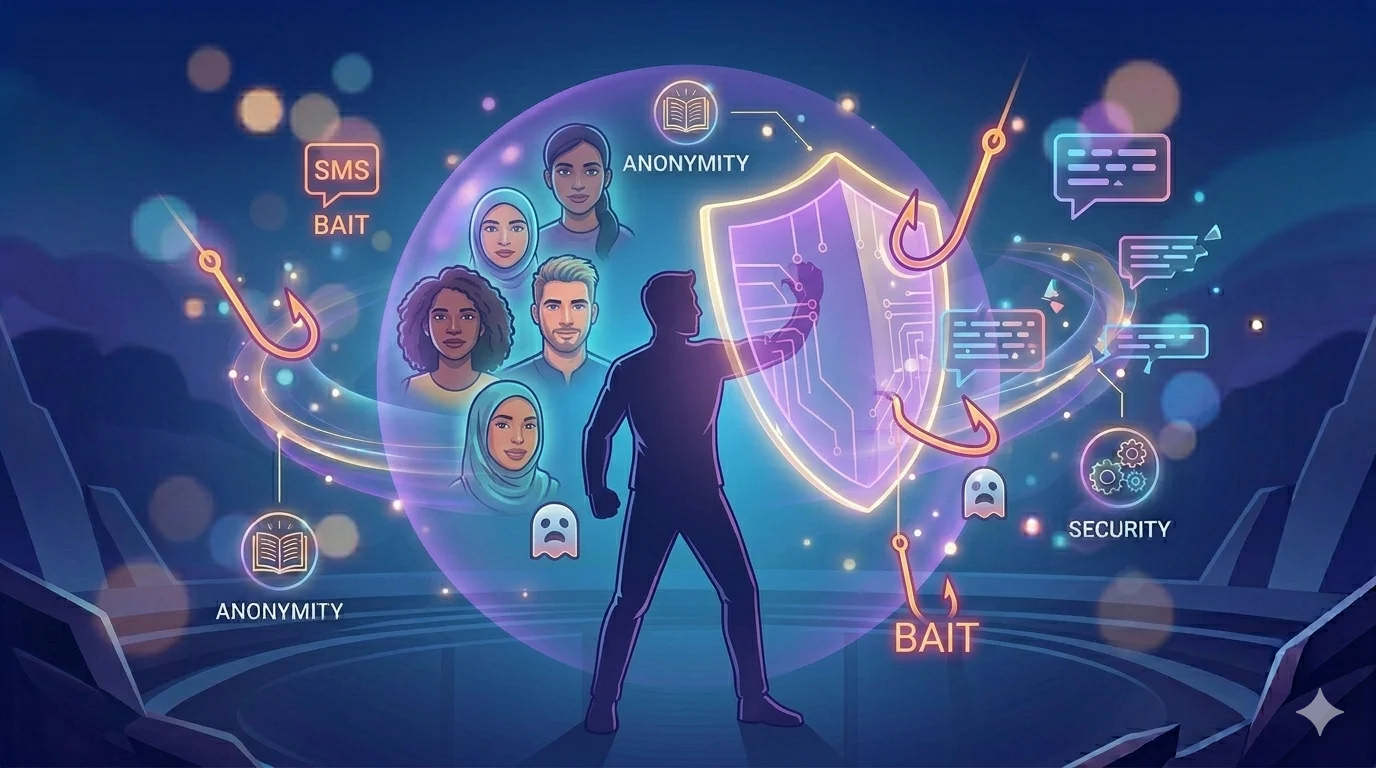
Digital Self-Defense: Spotting "Social Engineering" Before It Becomes a Scam
When most people think of cybercrime, they picture a hooded hacker in a dark room furiously typing green code to break through a firewall. In reality, the modern digital landscape of 2026 operates differently. Cryptographic systems and server infrastructures have become incredibly robust. It is now far too difficult, time-consuming, and expensive to hack a secure server.
So, what do malicious actors do? They don't hack the computer; they hack the human. This practice is known as Social Engineering. By manipulating your emotions, building false trust, and exploiting human psychology, scammers bypass digital security altogether. In the fast-paced world of random video chat, mastering digital self-defense is just as important as having a secure internet connection. Here is how to spot the signs of social engineering before you become a victim.
The Psychology of the Hack: Pretexting and Mirroring
A social engineering attack almost never starts with a threat or a demand for money. It starts with "Pretexting"—the creation of a fabricated scenario to engage a targeted victim in a manner that increases the chance the victim will divulge information.
To do this, scammers often weaponize Mirroring Theory. If you connect with someone on a 1-on-1 video call and they immediately start agreeing with everything you say, adopting your exact body language, and claiming to share highly specific, niche interests, your brain releases oxytocin. You feel a sudden, intense bond. While genuine connections definitely happen, extreme, rapid mirroring from a stranger should trigger a subtle internal alarm. Trust takes time to build; if it feels artificially accelerated, it might be a pretext.
Common Attack Vectors in Video Chat
Because platforms built on the Ghost Architecture retain zero personal data, scammers cannot steal your information from our databases. They have to convince you to hand it over willingly. Here are the three most common tactics they employ:
1. The "Platform Migration" Trap
This is the most frequent tactic. A user will connect, feign a bad connection, and immediately say: "My camera is glitching here, let's move to WhatsApp or Telegram. What's your number?"
Why it's dangerous: As we explored in our piece on why privacy platforms don't want your phone number, giving a stranger your mobile number destroys your anonymity. It allows them to reverse-search your real identity, find your other social media accounts, and initiate targeted phishing text messages. Never migrate to a platform tied to your real-world identity with someone you just met.
2. The "Over-Sharer" Phishing Expedition
In this scenario, the stranger will act incredibly open and vulnerable, sharing "secrets" about their life to encourage you to do the same. They will casually ask questions like: "What was the name of your high school? Did you have a favorite pet growing up? What street did you live on?"
Why it's dangerous: These are not innocent conversation starters; these are the standard security questions used by banks, email providers, and social media accounts to reset passwords. If you offer up this information, they can systematically attempt to breach your external accounts.
3. The Deepfake / Blackmail Angle
With the rise of generative AI, scammers attempt to lure users into compromising situations on camera, threaten to generate explicit deepfakes of their face, or claim they have recorded the session, demanding payment to delete the footage.
Why it's dangerous: The psychological terror of blackmail is immense. The absolute best defense is strict adherence to our Community Guidelines and keeping your face out of compromising contexts. Furthermore, because Chatzyo connects you anonymously, a scammer holds no power if they don't know your name or your social circle. If you remain anonymous, they have no leverage. You simply skip and move on.
Your Arsenal: How to Defend Yourself
Practicing digital self-defense does not mean you have to be paranoid; it simply means you need to be aware. Equip yourself with these three fundamental strategies:
- The "Zero-Trust" Link Policy: If a stranger drops a URL in the text chat—even if it claims to be a funny YouTube video or their personal portfolio—do not click it. Malicious links can execute scripts, drop tracking cookies, or redirect you to sophisticated phishing sites designed to look like a Google login page.
- Guard Your Metadata: While chatting, be mindful of what is visible in your physical background. A piece of mail on your desk, a specific uniform, or a uniquely identifiable view out your window can be used to pinpoint your location, undermining the platform's digital anonymity.
- Weaponize the Next Button: The ultimate tool in your self-defense arsenal is the Next Button. Scammers rely on politeness. They know social norms dictate that it is rude to abruptly leave a conversation. You must discard this norm. If someone asks for your social media handle too quickly, applies urgent pressure, or makes you feel slightly uncomfortable, do not explain yourself. Just click Next.
Frequently Asked Questions About Chat Safety
We highly advise against it until you have built significant trust. Giving out your Instagram provides a stranger with your real name, your friend list, and your location history—giving them massive leverage for social engineering.
No. As long as you are using a modern, updated browser (Chrome, Safari, Firefox), the WebRTC connection operates inside a secure sandbox. They cannot install malware on your computer through the video feed alone. You must click a link or download a file to be infected.
Immediately end the chat using the Next button. If you shared security question answers, go to your bank and email accounts and change those questions and passwords immediately. For a comprehensive overview, review our guide on how to talk to strangers safely.
Conclusion: Empowerment Through Awareness
A privacy-first platform provides the fortress, but you are the guard at the gate. Social engineering relies entirely on human error, manipulation of empathy, and the desire for rapid connection. By understanding these tactics, you strip the scammer of their power. You can enjoy the wild, wonderful spontaneity of global video discovery with the quiet confidence that your digital identity remains impenetrable.