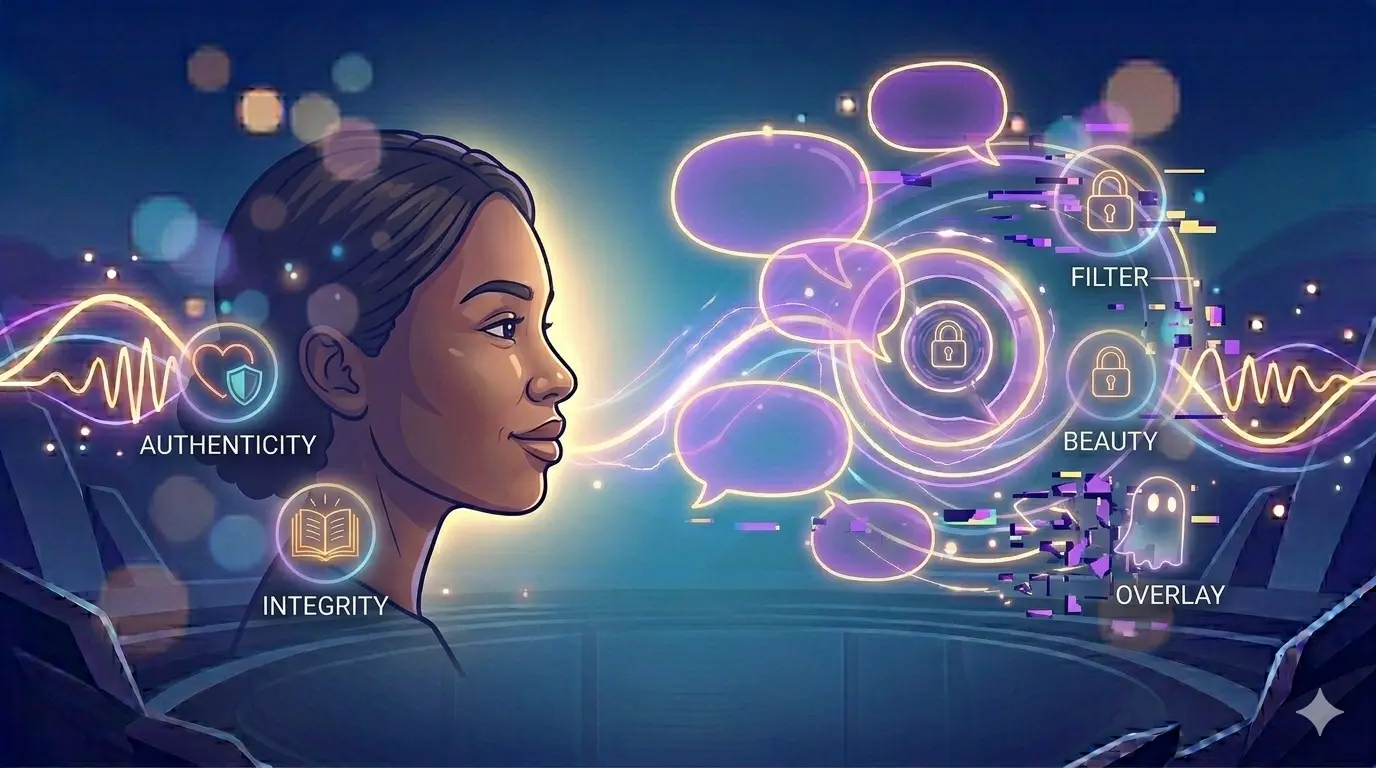
Will AR Filters Ruin Authenticity? The Debate Over "Raw" Video in 2027
Technology rarely evolves in a straight line; it operates in pendulums. For the past decade, the pendulum of digital communication has swung aggressively toward artificial enhancement. What began as innocent augmented reality (AR) dog ears on Snapchat has evolved into a multi-billion-dollar industry of real-time AI manipulation. Today, users can seamlessly alter their jawlines, erase blemishes, change their age, and even swap their entire face in high-definition video.
But as we look ahead to 2027, the cultural pendulum is beginning to swing back. In the realm of random video chat, a profound debate is raging between the allure of algorithmic perfection and the fundamental human need for authenticity. The question is no longer whether we can look perfect online, but whether that perfection is quietly destroying our ability to form genuine connections.
The Rise of the "Digital Mask"
To understand the debate, we must examine the psychology behind the digital mask. AR filters are incredibly popular on major social networks because they act as a psychological shield. They alleviate the vulnerability of presenting one's true self to the world. When you apply a "beauty filter," you are smoothing over the rough edges of your humanity.
In asynchronous media—like a recorded video or a static photo—this enhancement is widely accepted. We expect magazine covers to be retouched, and we now expect social media feeds to be filtered. However, synchronous media—live, real-time 1-on-1 video calls—is an entirely different psychological arena. Real-time communication relies heavily on micro-expressions: the slight crinkle of an eye, the asymmetrical twitch of a smile, the subtle flush of a cheek.
Hyper-realistic AR filters mask these micro-expressions. They replace a dynamic human face with a sophisticated, real-time puppet. When you are speaking to a stranger in a USA chat room whose face is heavily filtered, your subconscious brain detects the artificiality, even if your conscious brain does not. This triggers the "Uncanny Valley" effect—a subtle, persistent feeling of unease and mistrust.
The "Raw" Video Movement
In response to the oversaturation of artificial perfection, a powerful counter-culture is emerging: the "Raw" Video movement. Users are increasingly seeking out digital environments that prohibit or bypass server-side AR filtering. They want to see messy backgrounds, uneven lighting, tired eyes, and genuine smiles.
This craving for authenticity is fundamentally reshaping how developers build platforms. Heavy, native applications often process video through centralized servers, making it easy to inject proprietary AR filters and beauty algorithms into the feed before it reaches the recipient.
The solution lies in decentralized architecture. As we discussed in our technical breakdown of WebRTC vs. WebSockets, modern browser-based connections allow for true peer-to-peer (P2P) data transfer. When a connection is P2P, the video data travels directly from User A's camera to User B's screen without passing through a middleman server. This architectural choice inherently champions "raw" video. It is the digital equivalent of stripping away the makeup.
Why Raw Video is a "Green Flag"
In the fast-paced ecosystem of random chat, trust is established in milliseconds. When users log on, they are constantly scanning the environment to identify green flags that indicate a high-value conversationalist.
An unfiltered, raw video feed has become one of the ultimate green flags of 2026. It signals confidence, transparency, and a willingness to be vulnerable. It says, "I am not trying to deceive you; this is exactly who I am."
While you should absolutely focus on optimizing your physical space—such as using proper lighting and background setups to present yourself well—this is a physical enhancement, not an algorithmic deception. Real-world lighting respects the laws of physics and allows micro-expressions to shine through; AR filters overwrite them.
Chatzyo's Stance: The Architecture of Authenticity
At Chatzyo, we have closely monitored the AR debate, and our philosophy is deeply rooted in our technology. Our platform is built on the foundation of the Ghost Architecture. The core tenet of this architecture is zero interference. We do not store your data, we do not require a login, and we do not intercept your video stream to apply proprietary "beauty" algorithms.
We believe that the most powerful social network is one that simply gets out of the way. By utilizing unmediated, browser-based WebRTC connections, we guarantee that the face you see on the screen is the real face sitting on the other side of the globe. We provide the connection; you provide the authenticity.
Frequently Asked Questions
While tech-savvy users can use virtual cameras to route AR software into their browser feed, Chatzyo does not build or encourage native AR filters on the platform itself. We find that the vast majority of our community naturally gravitates toward, and engages longer with, raw, authentic video feeds.
Not at all! However, the best way to look better is through physical world adjustments—good window lighting, an eye-level camera angle, and a clean background. These adjustments enhance your natural features without crossing into algorithmic deception, maintaining the trust essential for peer-to-peer chatting.
Conclusion: The Premium on Reality
As AI becomes increasingly capable of generating flawless digital fabrications by 2027, perfection will become cheap, ubiquitous, and ultimately boring. In a world where anyone can look like a supermodel with the click of a button, "Raw" reality becomes the premium commodity. True human connection cannot be coded, filtered, or deepfaked. By embracing unfiltered video, we defend our right to be gloriously, authentically human.