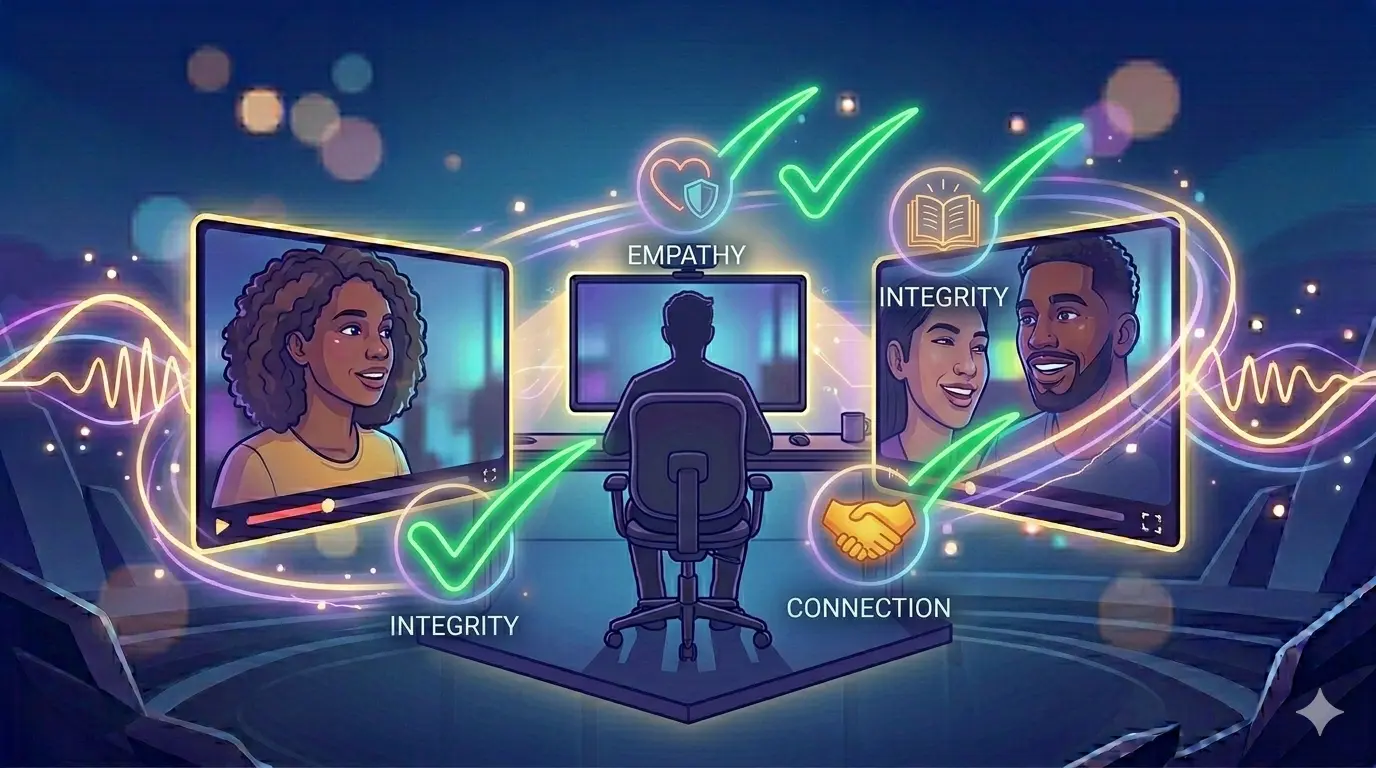
Identifying "Green Flags": How to Spot High-Value Conversationalists Instantly
The landscape of random video chat moves at a blistering pace. When you are clicking through connections, you are making split-second neurological judgments. Is this person safe? Are they interesting? Are they a troll? This rapid-fire evaluation process is the engine behind the "skip economy," a phenomenon we explored in detail when discussing the psychology of the next button.
Most internet users are acutely aware of "Red Flags"—the dark, poorly lit rooms, the immediate inappropriate comments, or the agonizing silence. We know when to run. However, the true masters of platonic social discovery don't just run from the bad; they actively hunt for the good. They know how to identify "Green Flags." A green flag is a subtle, immediate indicator that the stranger on the other end of the screen is a high-value conversationalist worth your time and energy.
Whether you are logging in from a bustling café in Coimbatore or relaxing in a UK chat room late at night, spotting these green flags will drastically improve your online experience. Here is the ultimate 2026 guide to identifying them in the first ten seconds of a connection.
1. The Visual Green Flags (Seconds 0-3)
Before a single word is processed by your audio speakers, your visual cortex has already processed millions of data points about the other person's environment and posture.
The Intentional Environment
A major green flag is a visible effort put into their high-quality video setup. If you connect with someone and they are sitting in a well-lit room, with the camera positioned at eye level rather than pointing up their nose, it signals intentionality. It says, "I am here on purpose, and I respect this interaction enough to present myself clearly." The camera angle is crucial—an eye-level camera indicates a desire for peer-to-peer equality.
Relaxed, Open Body Language
Trolls and low-effort users often exhibit erratic, guarded, or overly intense body language. A high-value conversationalist will appear relaxed. They might be leaning slightly back in their chair, their shoulders dropped, perhaps offering a casual, easy smile the moment the WebRTC feed connects. This micro-expression of warmth immediately defuses the natural tension of meeting a stranger.
2. The Audio Green Flags (Seconds 3-7)
Once the visual baseline is established, the audio feed provides the next layer of filtration. Because modern browser-based platforms utilize zero-latency audio, you can pick up on subtle vocal cues instantly.
The "Initiation Test"
When the screen connects, who speaks first? A massive green flag is a user who offers a warm, immediate greeting. A simple "Hey there, how's your day going?" demonstrates social courage and breaks the ice. Conversely, someone who just stares at you in silence, waiting for you to do the heavy lifting of the conversation, is waving a yellow flag at best.
Environmental Audio Control
Are there smoke detectors chirping in the background? Is a TV blaring the news at maximum volume? A high-value conversationalist manages their auditory environment. If you connect and hear clear audio without chaotic background noise, it shows consideration for the person on the other end. It indicates they have created a space suitable for actual dialogue.
3. The Conversational Green Flags (Seconds 7-30)
If they have passed the visual and audio checks, you enter the conversational phase. This is where you determine if the connection will last two minutes or two hours.
They Deploy the Active Listener Framework
You can instantly spot a high-tier communicator if they utilize the active listener framework. Do they nod when you speak? Do they use non-intrusive murmurs like "Right" or "Yeah" to encourage you? Most importantly, do they ask follow-up questions based on what you *just* said, rather than waiting to launch into their own pre-planned monologue? If a stranger asks a relevant, open-ended question about your life, you have struck gold.
They Respect the "Ghost Architecture"
A defining trait of a high-value conversationalist in 2026 is their respect for digital ephemerality. They understand that Chatzyo is built on a Ghost Architecture—meaning the beauty of the platform is its zero-data, no-login anonymity.
A green flag user embraces this. They do not immediately ask for your Instagram, your exact address, or your WhatsApp number within the first five minutes. They are content to exist in the present moment, enjoying the spontaneous connection for what it is, without trying to force it into a permanent digital record. They understand the boundaries of platonic social discovery.
4. The Vibe Check: Emotional Mirroring
The final, and perhaps most nuanced, green flag is emotional mirroring. If you are having a low-energy, chill evening, a high-value conversationalist will naturally dial back their intensity to match your vibe. If you are highly energetic and excited, they will rise to meet your enthusiasm. This subconscious matching of energy levels is a profound indicator of empathy and social awareness.
Frequently Asked Questions
Green flags are indicators of high probability, not guarantees. People are complex. If a conversation starts well but devolves, you should never hesitate to enforce your boundaries. Review our digital safety guidelines and use the Next button whenever you feel uncomfortable.
Self-awareness is key. Before your next session, check your lighting, take a deep breath to relax your posture, and prepare one genuinely interesting, open-ended question to ask the first person you meet. Becoming the green flag is the best way to attract other high-value users.
Conclusion: Curating Your Digital Diet
Your time and attention are finite resources. By learning to rapidly identify visual intentionality, auditory respect, and conversational empathy, you stop reacting to bad connections and start curating a high-quality digital diet. The internet is full of incredible, diverse, and fascinating human beings. When you know what green flags to look for, finding them becomes less of a gamble and more of an art form.